
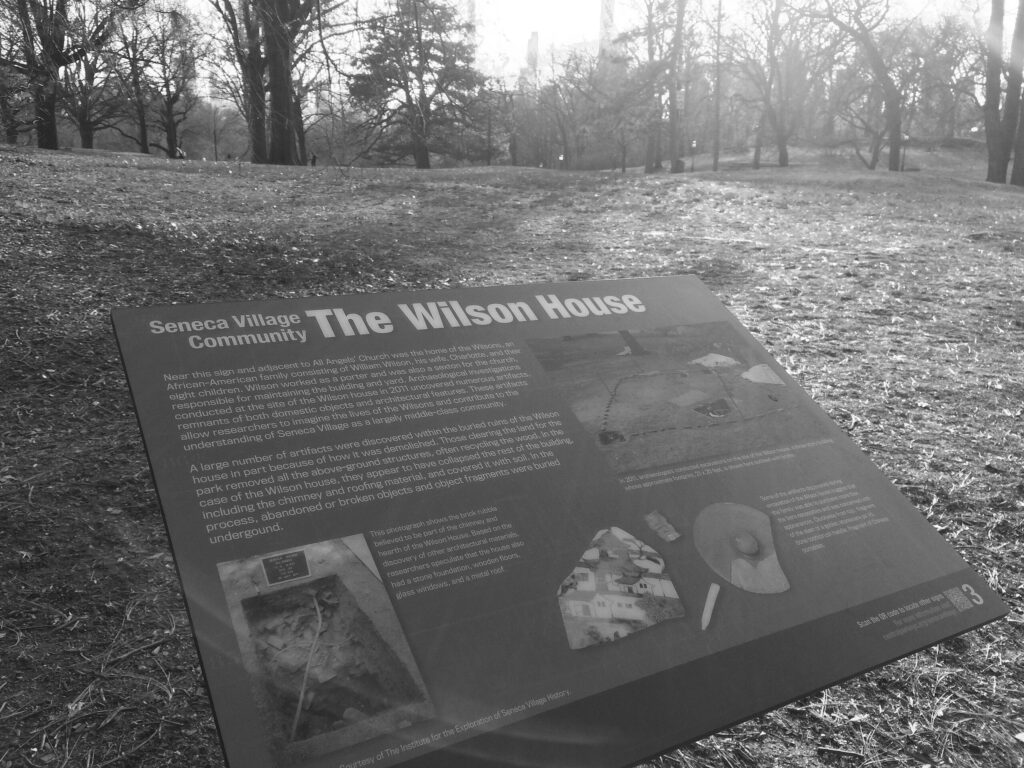
Seneca Village: A Lost Community in the Heart of New York
Imagine stepping back in time to Manhattan in the mid-19th century. Not the glittering metropolis we all know today, but a landscape holding neighborhoods of unexpected rural life. Among these, just a few miles north of the city’s heart, lay a vibrant community known as Seneca Village.
Established in 1825, Seneca Village was a unique settlement, a haven for working-class African Americans, Irish immigrants, and German immigrants. The city represented a remarkable story of self-determination and community building in a period marked by significant social and racial prejudice.
Seneca Village wasn’t just a place to live; it was a self-sufficient community with its own distinct character. African American landowners, in particular, found a measure of independence and the right to vote – a right largely denied to them elsewhere in New York State unless they met stringent property ownership requirements.
However, this thriving community’s story took a tragic turn. By the 1850s, New York City was rapidly expanding, and the land occupied by Seneca Village was greatly desired. The city’s planners had a vision of a grand public park that would serve as a “Central Park” for the growing metropolis. In the year 1853 the New York Legislature did a process known as Condemnation of land. This process is when a government entity takes private property for public use, even if the owner doesn’t want to sell. It’s a power which allows the government to acquire land for public projects like roads, schools in this case a park “Central Park”.
In the year 1857 marked the final chapter to Seneca Village. Despite constant protest and the deep roots the residents of the village has established, the city’s government moved forward with their plans. The land was stolen homes, churches, schools all destroyed in the name of creating a grand public park, a Urban Oasis that erased a whole village and community.
The story of Seneca Village serves as a poignant reminder of the complex layers of history that lie beneath the surface of our modern cities. It speaks of the aspirations and resilience of ordinary people, the forces of urban development, and the often-overlooked histories of marginalized communities. As we stroll through the beauty of Central Park today, it’s crucial to remember the vibrant life that was once there, a community called Seneca Village, and the stories that were silenced in its making.
Wear history – Know Truth It Is What It Is #iiwiibrand #itiswhatitis #tagyourcity #wearhistory